Leda’s Mother
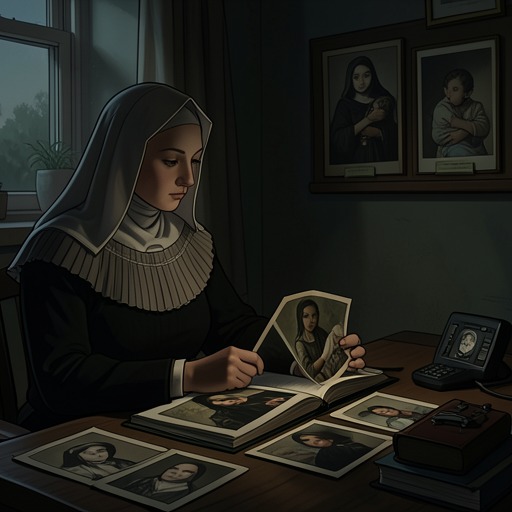
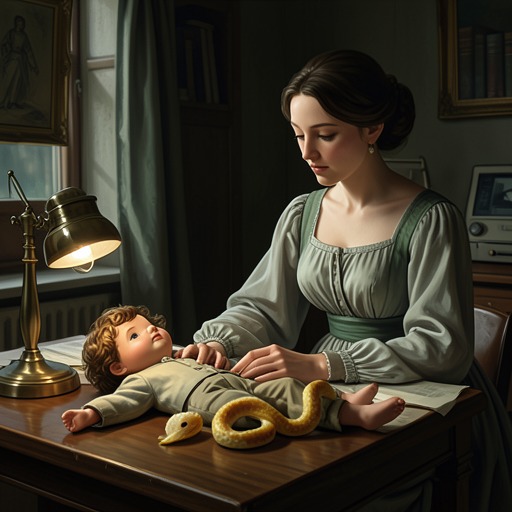
The Lost DaughterLeda’s Mother is a figure in Leda’s memories whose care is repeatedly shadowed by anger and threatened abandonment. She warns Leda about danger, tends to her when she is vulnerable, and later helps raise Bianca and Marta; at the same time, her repeated threats to leave shape Leda’s childhood fear and her adult unease about what mothers pass on to their daughters. The novel presents her chiefly through Leda’s recollections, where affection and accusation remain difficult to separate.
Childhood Memories and Warnings
As a child, Leda was warned by her mother never to swim when a red flag was raised, because the sea could be dangerous. Years later, while ill at the wheel and then recovering in hospital, Leda remembers a calm, empty beach and her mother calling to her from the dunes about the flag. The remembered warning returns at a moment when Leda is losing awareness of driving; it links present danger to an enduring childhood fear, without clarifying whether the scene is a dream or an alarmed fantasy.
Leda also remembers her mother’s repeated threats that her daughters would wake to find her gone. Each morning Leda woke afraid, but her mother was still at home. The distinction between the threat and its fulfillment matters: the mother’s words made departure an ever-present possibility, even as she remained. Leda recalls her mother’s Neapolitan dialect as changing with her mood, from a gentle cadence to angry commands and warnings. Language carries both intimacy and dread in these memories.
Care and Anger
Leda’s memories of being cared for are similarly mixed. When Leda stayed in the water until she was cold, her mother pulled her out, covered her with a towel, and rubbed her dry. Leda could not tell whether this forceful attention came from concern for her health or from anger that had accumulated over time. The episode does not resolve the ambiguity; care is present, but Leda experiences it as difficult to distinguish from hostility.
That uncertainty informs Leda’s later understanding of her own motherhood. Exhausted while raising Bianca and Marta, she recalls feeling relief when Marta’s crying required her to interrupt a game with Bianca. She had wanted to remain patient and to be a good mother, yet felt that one daughter was repeatedly pulling her away from the other. Leda’s reflections do not establish that she simply repeats her mother’s conduct, but they show how the strain of caregiving and the wish to be loving coexist with impatience and withdrawal.
Care of Bianca and Marta
When Leda left her daughters, she feared that Gianni would take them to Naples and leave them with her mother and relatives. She associated that possibility with the family habits and language from which she had tried to distance herself after leaving Naples to study in Florence. Although she asked Gianni not to leave the girls with those relatives, he sometimes took them to her mother’s home when work or travel overwhelmed him.
Leda later learned that her mother had cared for Bianca and Marta and had worn herself out doing so. Rather than feeling grateful, Leda directed her anger at her mother, accusing her of having marked the girls as she believed she herself had been marked. Leda later recognizes those accusations as unjust. Her mother defended herself, reacted with hurt and anger, and died shortly afterward. Leda speculates that her mother’s unhappiness may have contributed to her decline, but the account does not establish a cause of death. The last words Leda remembers from her mother were spoken in fractured dialect and expressed physical discomfort.
Inheritance and Narrative Significance
Leda’s Mother is significant not only as an individual remembered by her daughter but as part of a contested maternal inheritance. Leda fears that Bianca and Marta might absorb the family’s language and habits, yet she also recognizes how deeply that world remains within her. After returning to her daughters, she sometimes imagines that she created and nourished them alone, and describes sensing in them a female line of descent. Her desire for the girls to depend only on her is bound up with anger toward her own mother and anxiety about what has passed between generations.
The account remains filtered through Leda’s retrospective, self-questioning perspective. The mother appears in moments of warning, care, threat, and later responsibility, but rarely apart from Leda’s interpretation of them. That partial view preserves a central tension: the mother stayed when her words made Leda fear she would leave, and she cared for Leda’s daughters when Leda herself was absent. The novel neither reduces this history to maternal devotion nor treats the mother as the sole source of Leda’s difficulties; instead, it shows how care, resentment, and fear can become entangled across generations.